

Bathroom & Kitchen
Fixture Repairs, Toilets, Faucets and Disposals
The small stuff. Most of it is a worn part rather than a finished fixture, and a plumber can tell you which before anything gets replaced.
What is included
Toilets, faucets and disposals repaired
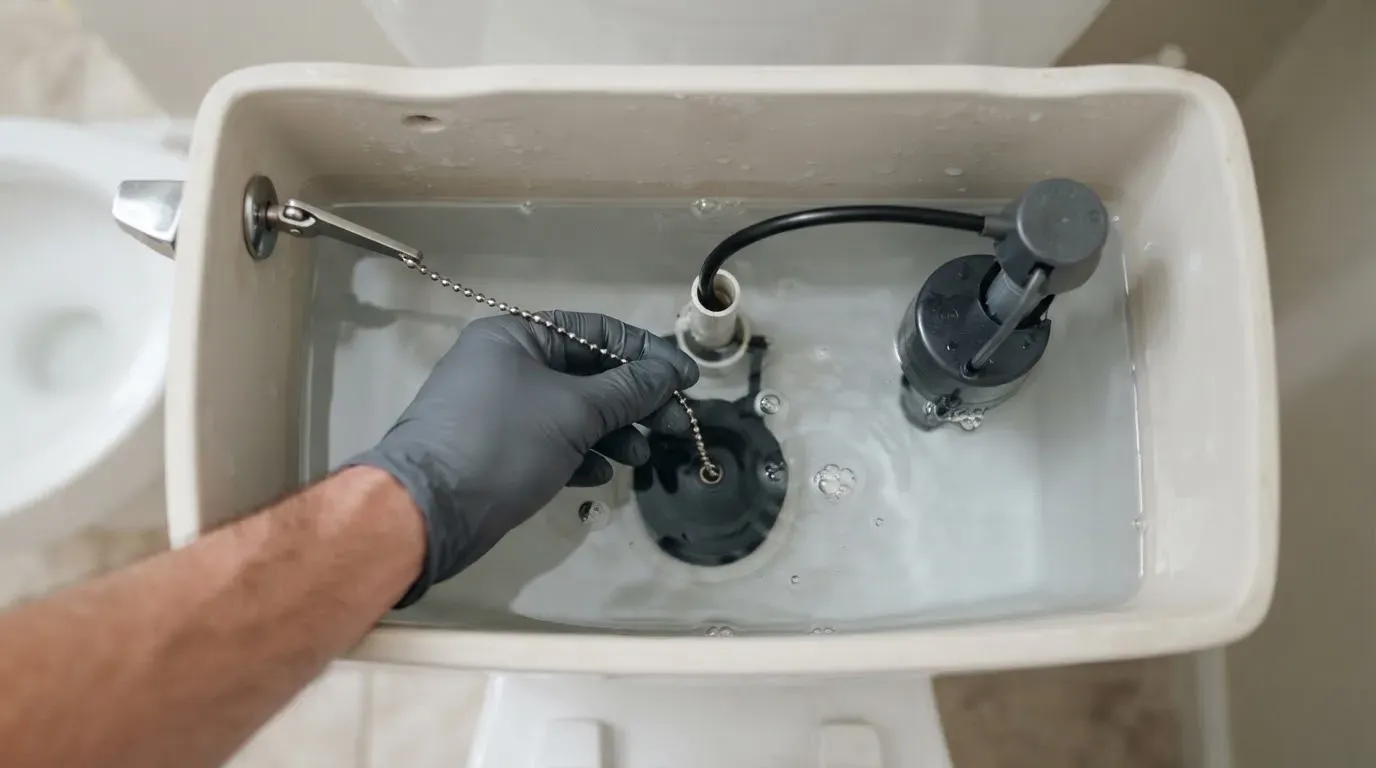
- Running, phantom-filling and weak-flushing toilets
- Fill valves, flappers, flush valves, wax rings and closet flanges
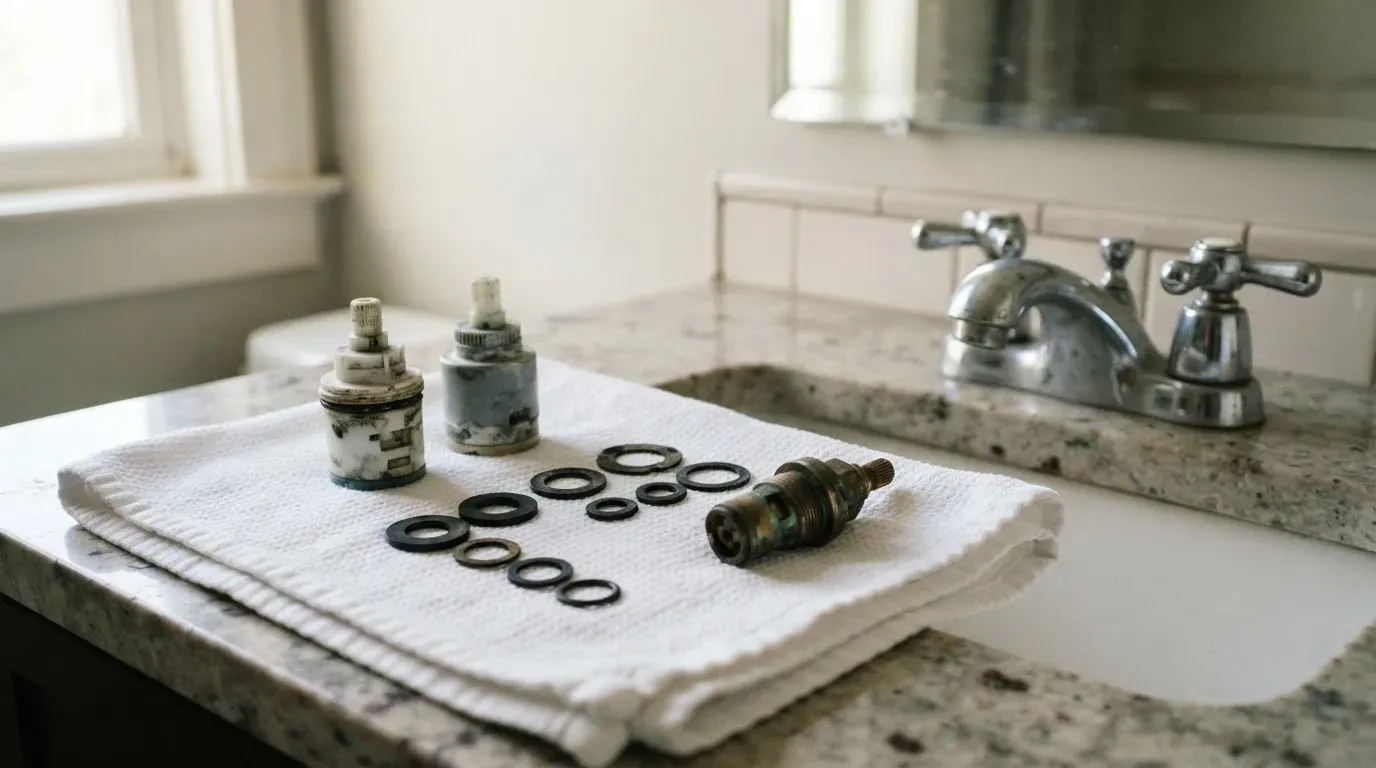
- Dripping faucets in kitchens and bathrooms, cartridge and ceramic disc work
- Shower valve and mixer repair, including thermostatic units
- Leaking sink traps, waste connections and pop-up assemblies
- Jammed, humming, leaking and dead garbage disposals
- Replacing seized or leaking isolation shutoff valves
- New toilet, faucet, sink, shower and disposal installation
Signs to look for
When a fixture needs a plumber
- Water running continuously, or the tank refilling on its own
- A drip that carries on after the faucet is fully closed
- Water on the floor around the base of the toilet, or the pan rocking
- The disposal hums but nothing turns, or does nothing at all
- Weak flow from one fixture while the rest of the house is fine
- A shutoff valve under the sink that will not turn, or weeps when it does
Why it happens
Why do toilets run and faucets drip?
01
Worn rubber, mostly
Flappers, washers, O-rings and cartridge seals are consumables. They harden, they distort, and they stop sealing. Almost every running toilet and dripping faucet in a house comes back to one of these, which is why the fix is usually small when it is diagnosed rather than guessed at.
02
Scale and grit in the working parts
Mineral deposits build up on aerators, cartridges and shower valves, which shows first as weak or uneven flow from one fixture rather than the whole house. It also stops fill valves seating properly, which is a common cause of a toilet that refills every few hours by itself.
03
A failed seal at the floor
A toilet that rocks breaks the wax seal underneath it, and then leaks into the floor rather than onto it. The smell and the staining usually appear before any visible water does, and the repair gets bigger the longer the subfloor stays wet.
04
Something hard in the disposal
A humming disposal is almost always jammed rather than dead. So is one that trips out. Both are recoverable far more often than people assume, which is worth knowing before you buy a unit you may not need.
Our approach
How a fixture repair goes
01
Tell us what the fixture is doing
Whether the disposal hums or stays silent, whether the toilet refills on its own, whether the drip carries on with the handle fully closed. That narrows it down before the plumber arrives.
02
Diagnose the specific fixture
Which part has failed, whether the shutoff serving it actually works, and whether the fixture itself is worth keeping. On older fixtures, parts availability gets checked before a repair is recommended over a replacement.
03
Lay out repair against replacement
Where both are viable you hear both options and pick. We do not decide for you which side of that line your fifteen-year-old faucet falls on.
04
Fit it and test it properly
Cycled, checked under load, and checked again for weeping at the connections after it has sat under pressure. A fitting that is dry on the day and damp in a week has not been tested.
Running toilets, dripping faucets and dead disposals
A running toilet, a dripping faucet and a dead disposal all have the same shape: a small part has failed inside something that is usually worth keeping. Fixture faults are easy to guess at from the doorway and harder to diagnose properly, and a replacement is a simpler conversation than a repair.
So the useful thing on this kind of work is finding out which part has failed, before anything gets replaced.
Quick checks while you wait for us
A disposal that hums or does nothing. There is a reset button on the underside, usually red, and a hex fitting in the center of the base. Turn the key back and forth to loosen the plate, press the reset, and try it again. This recovers a large share of units people were about to replace.
A toilet that refills by itself. Take the lid off and look at the flapper at the bottom of the tank. If the sound stops when you press down on it, that is your fault found, and it is a small part to replace.
Weak flow at one faucet. Unscrew the aerator from the end of the spout, rinse the screen, refit it. Scale and grit collect there and nowhere else.
Tell us what happened when you tried them. It narrows the job down before the plumber arrives.
When a fixture is genuinely finished
There is a real line, and we will tell you when something crosses it. A cracked tank or bowl is not repairable. A faucet whose cartridge is no longer manufactured is not worth labor twice. A disposal leaking from the housing seam rather than a connection has failed internally, and the housing is the unit.
What we will not do is use those as a default answer. Plenty of fifteen-year-old fixtures have another decade in them and need one part, and you should be told that even though it is the smaller job.
Older houses, older fittings
A good share of the housing in Lebanon city and the boroughs predates the fittings now considered standard. That shows up on this work in a specific way: the shutoff valves under sinks and behind toilets are often original, never operated, and seized solid. People discover this at the worst possible moment.
If the valve serving a fixture will not turn during the repair, we will say so and offer to replace it. It is a small addition to a small job, and it is the difference between a controlled repair and a wet floor the day something lets go.
My toilet runs on and off by itself. What is wrong with it?
The disposal just hums. Do I need a new one?
Why does one faucet have weak flow when the rest of the house is fine?
Is it worth repairing an old faucet or should I just replace it?
My toilet rocks slightly. Does that matter?
The shutoff valve under my sink will not turn. Can you still work on the faucet?
Do you work on commercial fixtures?
When it is more than the fixture
- Drain cleaningClearing a drain is easy. Working out whether it will block again next month is the part that matters.
- Leak detectionFinding the leak accurately is what keeps the repair small. Guessing is what turns one hole in a wall into three.
- Emergency plumbingWhen water is coming in and you cannot stop it, the first ninety seconds matter more than who you call. Shut it off, then call us.
Ready when you are
Toilet running all night? Call us
Tell us what is going wrong and we'll get a licensed plumber out to look at it. Nothing gets done until you've agreed to it.
- Licensed and insured plumbers
- Residential and commercial
- No hidden fees
Talk to a plumber
Tell us what is going wrong and we will arrange a visit.
Rather not call? Request service online
24/7 emergency service calls. The online form is not watched around the clock. If it is urgent, call.