

Leak Detection & Pipes
Leak Detection for Lebanon County Homes
Finding the leak accurately is what keeps the repair small. Guessing is what turns one hole in a wall into three.
What is included
Hidden leaks tracked down
- Tracing leaks behind walls, under floors and above ceilings
- Slab leak location
- Buried supply and irrigation line leaks
- Meter testing and isolation to confirm a leak exists
- Pinpointing before opening up, to keep access small
- Identifying whether the source is supply, waste or groundwater
Signs to look for
Signs of a hidden water leak
- A water bill that has climbed with no change in habits
- The water meter moving with every fixture turned off
- A running or hissing sound when nothing is on
- Damp, staining, bubbling paint or a musty smell
- A warm patch on a floor slab
- Loss of pressure with no obvious cause
- Mold appearing in a spot that keeps returning
Why it happens
What makes a pipe leak behind a wall?
01
Pinholes in aging copper
Water chemistry and flow velocity thin the pipe wall over decades until it weeps. These leaks are small, slow and often run for months inside a wall before anything shows on the surface.
02
Failed joints and connectors
Compression fittings, appliance supply hoses and older soldered joints all give up eventually, and the ones inside cabinets or behind appliances go unnoticed longest.
03
Galvanized reaching the end
Common in older Lebanon city housing. Corrosion thins the wall from the inside, and the first sign is often a damp patch rather than a burst.
04
Movement under a slab
Ground movement, poor bedding or a line rubbing against concrete wears through a supply pipe under a floor slab, where nothing is visible until the floor is warm or damp.
Our approach
How a hidden leak gets pinpointed
01
Confirm there is actually a leak
Everything off, then watch the meter. A moving meter with no draw proves water is escaping and separates a genuine leak from condensation or a roof problem, which are different trades entirely.
02
Narrow it down by isolation
Shutting off sections of the system and re-testing tells us which part is losing water before anyone opens anything. This step is what keeps the eventual access small.
03
Pinpoint the position
Acoustic listening, pressure testing and thermal differences are used to locate the point rather than the general area, and the position gets marked.
04
Explain the repair options
You get told what was found, where, and what fixing it involves, including whether rerouting the run beats opening it up in place.
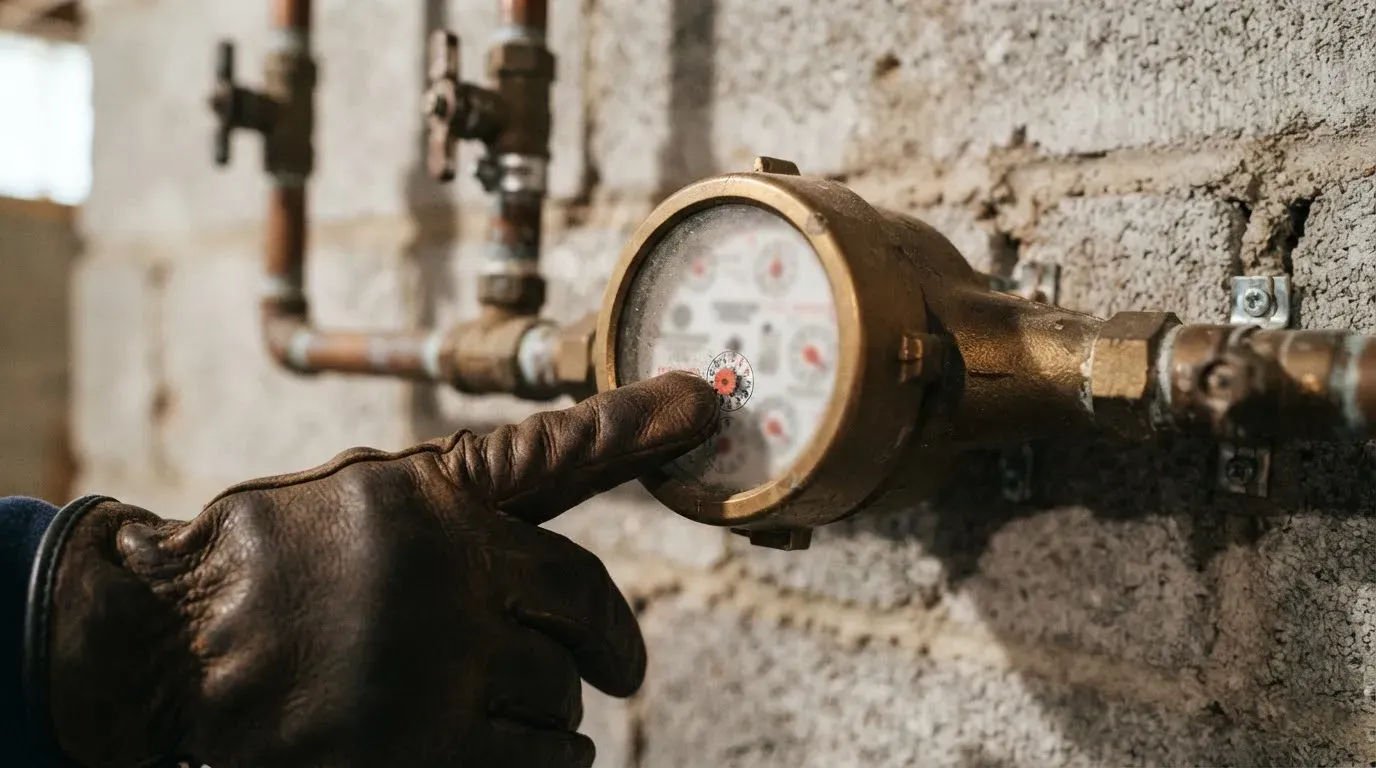
The meter test tells us where to start
If you have ten minutes before you call, there is one check that makes the call far more useful.
Turn off every water-using thing in the property: faucets, appliances, ice makers, humidifiers, irrigation. Then look at the water meter. If the dial or the leak indicator is still turning, water is escaping somewhere in your system. If it is completely still, whatever is happening is probably not a supply leak, and you may be looking at condensation, groundwater or a roof problem instead.
Tell us which of those you saw. A meter still turning points us at the supply side straight away, and a meter sitting still rules it out, so either answer saves time on the visit.
Why the stain is rarely where the leak is
The temptation on a damp patch is to open up the wall behind it. The problem is that water travels: it runs along joists, follows pipe runs and drops through at the first opportunity, so the visible damage is frequently nowhere near the failure.
Isolating the system section by section, then pinpointing acoustically or by pressure, turns a search into a marked spot. One marked spot means one opening, not two or three.
Pinhole leaks that keep coming back
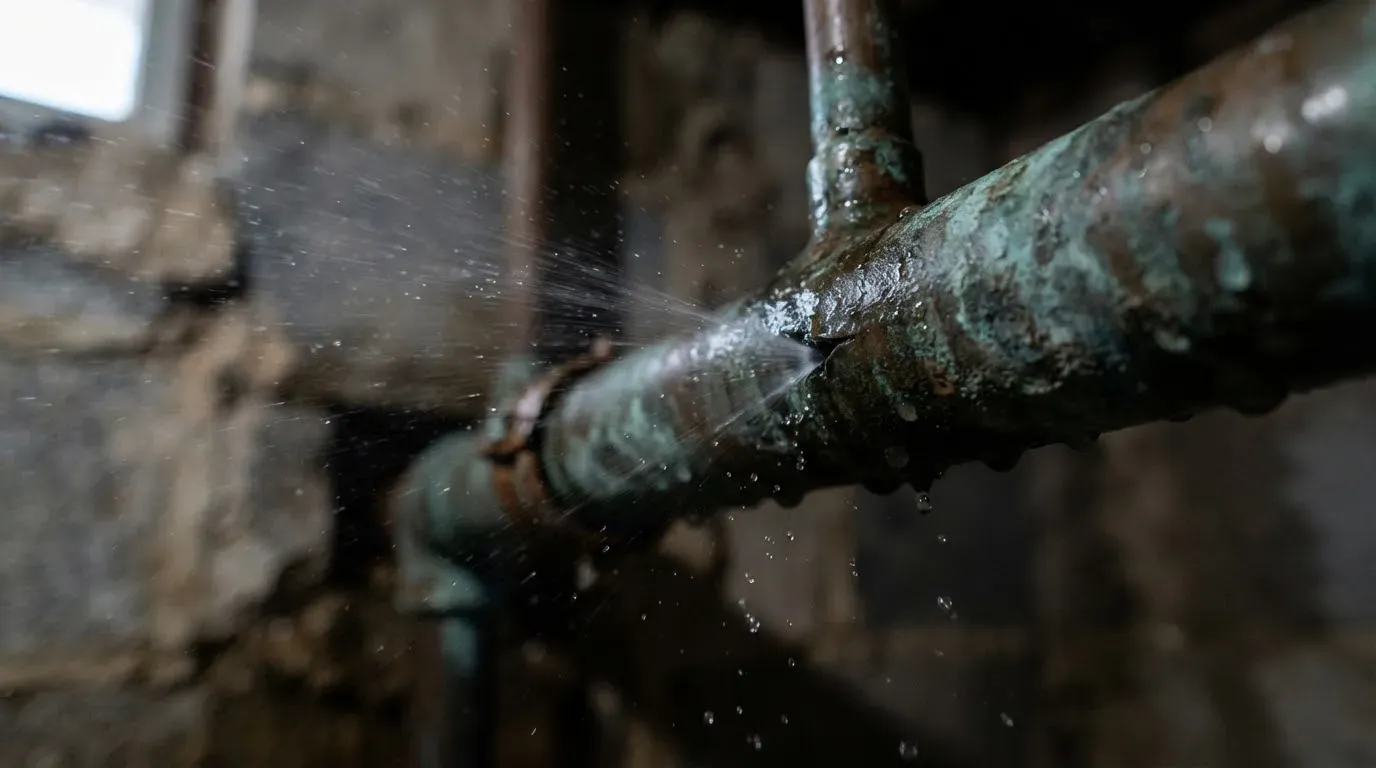
A copper pipe that develops one pinhole leak, gets repaired, and then develops another somewhere else a few months later is not a run of bad luck. It is the water.
Water low in pH is chemically hungry. It takes metal out of whatever carries it, thinning the pipe wall from the inside until it perforates at the thinnest point. Fix that point and the next thinnest one is already on its way. The tells that go with it are blue-green staining around drains and fixtures, a metallic taste, and leaks appearing in pipe that has no business failing yet.
This is common on private wells here, where corrosivity is the most frequent finding in tested samples. On a well it is worth a water test before any more pipe is cut, because treating the water is what stops the pattern. Repairing leak after leak without it means fixing the same cause over and over.
Older housing, older failure modes
In the pre-war housing across Lebanon city, the recurring find is galvanized supply thinning from the inside and copper of a certain age developing pinholes. Both leak slowly for a long time before they announce themselves.
Where a run has already failed once and the rest of it is in the same condition, we will tell you that repairing this one spot is buying a few months. Sometimes rerouting a run through accessible space beats chasing failures through plaster, the same reasoning as rerouting around a slab leak.
Could a leak in my yard be the water service line?
How can I tell if I have a hidden water leak?
Can you find a leak without tearing open walls?
What is a slab leak and how would I know?
Can a small leak really cause serious damage?
My bill went up but I cannot see anything. What now?
Do you find leaks in buried water lines and irrigation?
Could the damp patch be condensation rather than a leak?
When the leak needs more than a patch
- Slab leak repairA leak under a concrete floor is worth finding accurately, because the difference between one small opening and a broken-up floor is entirely about location work.
- Emergency plumbingWhen water is coming in and you cannot stop it, the first ninety seconds matter more than who you call. Shut it off, then call us.
- Sewer line repairThe lateral from your house to the main is the property owner's responsibility in most Lebanon County municipalities. It gets a camera before anyone decides how to fix it.
- Lead service line replacementIf your water authority wrote to you, the buried run from the curb stop into your house is the part in question. Which utility serves your address decides who handles it, so tell us the address when you call and we will check before anything is booked.
Ready when you are
Meter still spinning? Call and tell us
Tell us what is going wrong and we'll get a licensed plumber out to look at it. Nothing gets done until you've agreed to it.
- Licensed and insured plumbers
- Residential and commercial
- No hidden fees
Talk to a plumber
Tell us what is going wrong and we will arrange a visit.
Rather not call? Request service online
24/7 emergency service calls. The online form is not watched around the clock. If it is urgent, call.